

Silicone Leather vs PU Leather: Which Is Better for Modern Furniture?

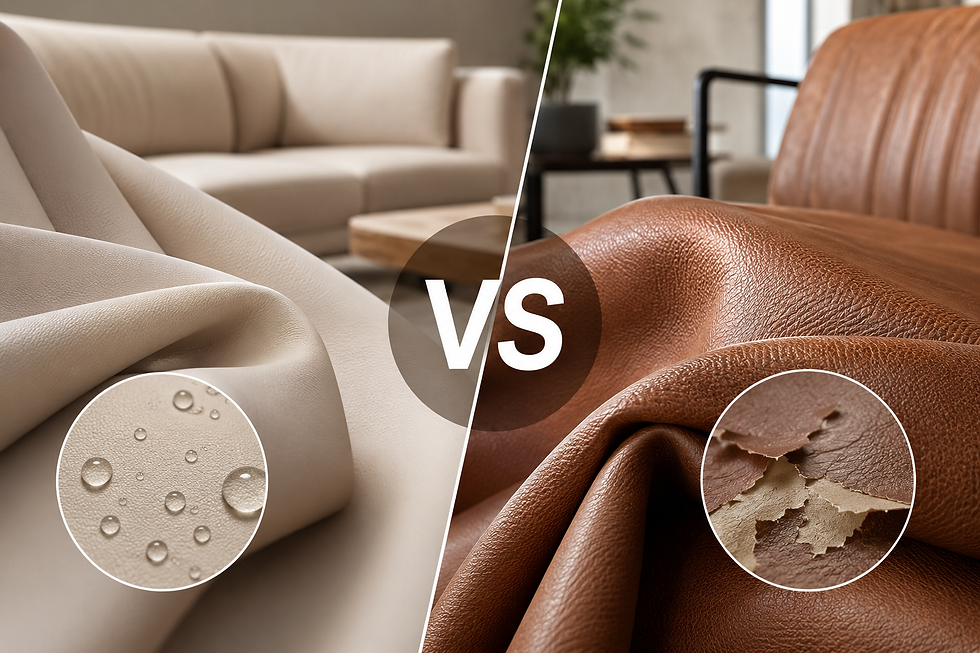
In today’s furniture industry, material selection plays a critical role in determining product durability, sustainability, user comfort, and long-term maintenance costs. As consumers and commercial buyers become more conscious of environmental impact and indoor air quality, the discussion around silicone leather vs PU leather has become increasingly relevant.
Both materials are widely used in modern upholstery applications, including sofas, dining chairs, office furniture, hospitality seating, and commercial interiors. However, their performance characteristics differ significantly in areas such as chemical resistance, VOC emissions, hydrolysis resistance, stain protection, and overall lifespan.
This guide explores the key differences between silicone leather and PU leather, helping furniture brands, wholesalers, and manufacturers determine which material is better suited for modern furniture applications.
What Is Silicone Leather?
Silicone leather is an advanced synthetic upholstery material coated with silicone-based polymers instead of polyurethane (PU) or PVC. It is commonly recognized as a non-toxic leather alternative and is increasingly used in premium furniture, healthcare seating, marine upholstery, and child-friendly environments.
Unlike traditional synthetic leather materials, silicone leather is designed to offer:
Superior stain resistance
Low VOC emissions
Enhanced UV stability
Hydrolysis resistance
Soft-touch comfort
Long-term durability
Because of these properties, many manufacturers now position silicone leather as a sustainable leather alternative for modern interior applications.
Common SEO Keywords Included
silicone leather
sustainable leather alternative
non-toxic leather material
synthetic leather material
eco-friendly upholstery material
What Is PU Leather?
PU leather, also known as polyurethane leather, is one of the most common synthetic leather materials used in furniture manufacturing worldwide.
PU leather is created by applying a polyurethane coating onto a fabric backing, producing a material that resembles genuine leather while remaining more affordable and easier to maintain.
Its popularity comes from:
Lower production cost
Wide range of textures and colors
Soft appearance
Ease of mass production
However, conventional PU leather can experience issues over time, including:
Surface peeling
Hydrolysis degradation
Reduced resistance to heat and chemicals
VOC emissions depending on formulation quality
Despite these limitations, PU leather remains a dominant material in the global upholstery market due to its cost efficiency.
Silicone Leather vs PU Leather: Key Differences
1. Durability and Lifespan
One of the biggest differences between silicone leather vs PU leather is long-term durability.
Silicone leather generally demonstrates stronger resistance to:
Cracking
Peeling
UV exposure
Moisture damage
Chemical degradation
PU leather, while visually appealing initially, may deteriorate more quickly under humid or high-traffic conditions.
For modern furniture brands focused on product longevity, durable synthetic leather materials are becoming increasingly important, especially in hospitality and commercial projects.
Winner:
Silicone leather offers better long-term performance for demanding environments.
2. Stain Resistance and Maintenance
Furniture in residential and commercial spaces must withstand spills, oils, cosmetics, cleaning chemicals, and daily wear.
Silicone leather is widely known for its:
Excellent stain resistance
Easy-clean surface
Chemical resistance
Anti-fouling properties
This makes it highly suitable for:
Family sofas
Restaurants
Hotels
Healthcare seating
Child-friendly furniture
PU leather can also provide basic stain resistance, but lower-grade materials may absorb oils or discolor over time.
High-search keywords naturally integrated:
stain resistant leather alternative
waterproof vegan leather
easy-clean upholstery material
Winner:
Silicone leather performs better in high-use environments.
3. Environmental and Health Considerations
As consumers pay closer attention to indoor air quality and sustainability, manufacturers are increasingly searching for PVC-free leather and eco-friendly leather alternatives.
High-quality silicone leather products are often:
PVC-free
Phthalate-free
Low VOC
Odor resistant
More skin-friendly
This makes silicone leather attractive for:
Healthcare furniture
Educational facilities
Baby products
Premium residential interiors
PU leather quality varies significantly depending on formulation and manufacturing standards. Lower-cost products may contain solvents or additives that contribute to VOC emissions.
Popular search intent keywords:
eco friendly leather alternative
PVC free leather
non toxic leather material
sustainable upholstery fabric
Winner:
Silicone leather is generally viewed as the more environmentally conscious option.
4. Comfort and Texture
Modern furniture buyers expect materials to combine aesthetics with comfort.
Silicone leather is often praised for:
Soft-touch feel
Smooth texture
Reduced stickiness in hot climates
Comfortable seating experience
PU leather can replicate the appearance of genuine leather effectively, but some lower-grade materials may feel more plastic-like over time.
For premium furniture collections, tactile experience plays a major role in customer perception and product positioning.
Winner:
Silicone leather often provides a more refined touch and user experience.
5. Cost and Manufacturing Efficiency
PU leather remains more cost-effective for large-scale production and budget-focused furniture projects.
Silicone leather typically comes at a higher price point because of:
Advanced material formulation
Enhanced durability
Higher performance standards
For brands targeting premium, healthcare, hospitality, or long-lifecycle furniture markets, the additional investment may be justified through reduced maintenance and replacement costs.
Winner:
PU leather is more economical upfront, while silicone leather may provide better long-term value.
Which Material Is Better for Modern Furniture?
The answer depends on the target market and product positioning.
Choose Silicone Leather If You Need:
Premium upholstery performance
Eco-friendly furniture materials
Long-lasting durability
Low VOC materials
Easy-clean surfaces
Commercial-grade furniture applications
Choose PU Leather If You Need:
Lower manufacturing costs
Fast mass production
Budget-friendly furniture collections
Decorative residential applications
As the furniture industry continues shifting toward sustainable leather alternatives, silicone leather is gaining momentum among brands prioritizing safety, durability, and environmental performance.
Future Trends in Upholstery Materials
The global furniture market is gradually moving toward:
PVC-free upholstery
Sustainable materials
Low-emission furniture
Vegan leather alternatives
High-performance synthetic leather
As a result, many furniture manufacturers are now evaluating whether traditional PU leather can continue meeting evolving consumer expectations.
The growing demand for silicone vegan leather reflects broader trends in sustainability, indoor wellness, and long-term product quality.
Final Thoughts
Both silicone leather and PU leather offer unique advantages for modern furniture manufacturing. PU leather remains a practical and affordable option for many applications, while silicone leather delivers superior durability, stain resistance, and environmental performance.
For brands developing next-generation furniture collections, understanding the differences between these materials is essential for balancing cost, aesthetics, sustainability, and long-term customer satisfaction.
Looking for High-Performance Silicone Leather Materials?
If you are sourcing silicone leather material for furniture, upholstery, hospitality, or commercial applications, choosing the right supplier is critical for ensuring consistent quality and long-term performance.
We provide professional material solutions for global furniture and upholstery manufacturers, including customizable synthetic leather options designed for modern commercial and residential applications.
Contact us to learn more about:
Silicone leather material options
Upholstery applications
OEM and custom specifications
International export support
Material sampling and technical consultation


Comments